Table of Contents
The Green-Cheeked Conure, scientifically known as Pyrrhura molinae, is a small, vibrant parrot that has captured the hearts of bird enthusiasts around the world. Originating from the lush forests of South America, particularly in regions like Bolivia, Brazil, and Paraguay, these charming birds have become increasingly popular as pets due to their playful nature and affectionate demeanor. Their striking plumage and engaging personalities make them a delightful addition to any household.
As a member of the conure family, the Green-Cheeked Conure is known for its social behavior and intelligence. These birds thrive on interaction and stimulation, making them ideal companions for those who can dedicate time to their care and socialization. In this article, we will explore the various aspects of the Green-Cheeked Conure, including its physical characteristics, habitat, diet, socialization needs, common health issues, and training requirements.
By understanding these factors, potential owners can make informed decisions about welcoming one of these delightful birds into their lives.
Key Takeaways
- Green-Cheeked Conures are small, colorful parrots known for their playful and affectionate nature.
- They have a stocky build, green feathers on their cheeks, and are known for their acrobatic abilities and playful behavior.
- In the wild, Green-Cheeked Conures are found in the forests and woodlands of South America, where they live in flocks and forage for fruits, seeds, and nuts.
- A balanced diet for Green-Cheeked Conures includes a variety of fruits, vegetables, seeds, and pellets, along with occasional treats like nuts and grains.
- Green-Cheeked Conures are social birds that thrive on interaction and bonding with their human companions, requiring regular socialization and mental stimulation.
Physical Characteristics and Behavior of the Green-Cheeked Conure
The Green-Cheeked Conure is a small parrot, typically measuring around 9 to 10 inches in length. One of its most distinctive features is its vibrant green plumage, which covers most of its body. The bird’s wings are adorned with shades of blue and yellow, while its underbelly showcases a beautiful maroon hue.
The face is characterized by a dark crown and a strikingly bright green cheek patch that gives the bird its name. Their beaks are short and strong, perfectly designed for cracking seeds and nuts. In terms of behavior, Green-Cheeked Conures are known for their playful and curious nature.
They are highly social birds that enjoy engaging with their human companions as well as other pets. Their playful antics can provide endless entertainment, as they love to climb, explore, and play with toys. These birds are also known for their vocalizations; while they are not as loud as some larger parrot species, they can still produce a range of sounds from soft chirps to more boisterous calls.
Their playful demeanor and affectionate behavior make them a joy to have around.
Habitat and Natural Environment of the Green-Cheeked Conure
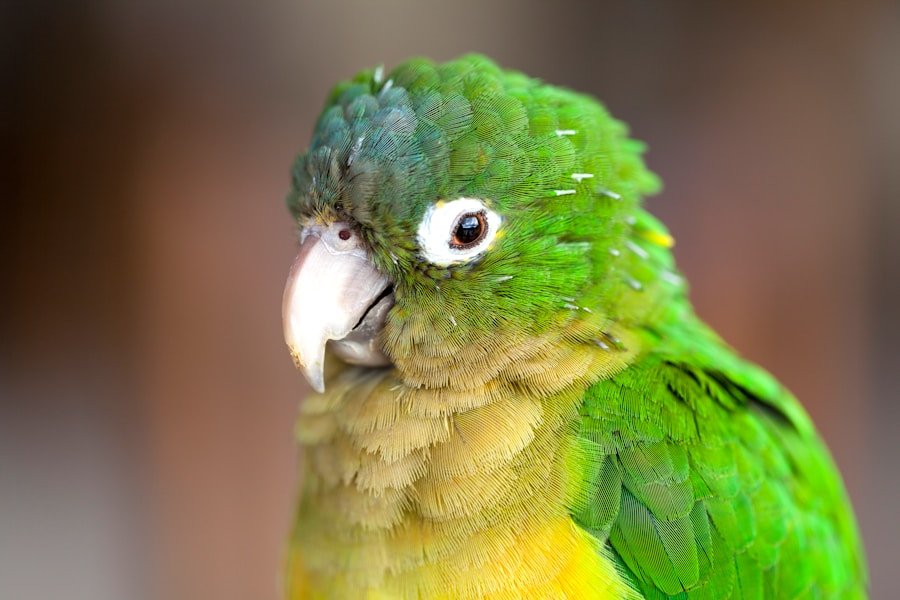
In their natural habitat, Green-Cheeked Conures inhabit subtropical and tropical forests, often found in areas with abundant trees and vegetation. They prefer to live in flocks, which provides them with social interaction and protection from predators.
Their natural environment is rich in fruits, seeds, and nuts, which form the basis of their diet. The lush forests where they reside offer ample opportunities for foraging and nesting. Green-Cheeked Conures often build their nests in tree cavities or hollows, where they can lay their eggs safely away from potential threats.
The dense foliage provides cover from predators while also offering a variety of food sources. Understanding their natural habitat is essential for pet owners who wish to replicate a suitable environment for their Green-Cheeked Conure at home.
Diet and Feeding Habits of the Green-Cheeked Conure
| Aspect | Data/Metric |
|---|---|
| Dietary Preference | Seeds, fruits, vegetables, and some protein sources such as cooked chicken or eggs |
| Feeding Frequency | Twice a day, morning and evening |
| Food Portions | 1-2 tablespoons of high-quality parrot seed mix, supplemented with fresh fruits and vegetables |
| Water Consumption | Approximately 50-100 ml per day |
| Favorite Foods | Apples, grapes, broccoli, carrots, and almonds |
A balanced diet is crucial for the health and well-being of Green-Cheeked Conures. In the wild, these birds primarily feed on fruits, seeds, nuts, and berries. As pets, they require a similar diet that includes high-quality pellets specifically formulated for conures, fresh fruits, vegetables, and occasional treats like nuts or seeds.
Pellets should make up about 60-70% of their diet to ensure they receive essential nutrients. Fresh fruits such as apples, bananas, berries, and leafy greens should be offered daily to provide variety and enrichment. It’s important to avoid feeding them avocado, chocolate, or caffeine-containing foods, as these can be toxic to birds.
Additionally, providing fresh water daily is essential for hydration. Owners should also be mindful of portion sizes to prevent obesity, which can lead to various health issues in birds.
Socialization and Bonding with the Green-Cheeked Conure
Green-Cheeked Conures are highly social creatures that thrive on interaction with their human companions. They form strong bonds with their owners and often seek out attention and affection. To foster a healthy relationship with your conure, it’s essential to spend quality time with them daily.
This can include talking to them, playing games, or simply allowing them to perch on your shoulder while you go about your day. Socialization is key to ensuring that your Green-Cheeked Conure remains well-adjusted and confident. Introducing them to new experiences gradually can help them adapt to different environments and people.
Regular handling from a young age can also promote trust and reduce any fear or anxiety they may have around humans. Engaging in interactive playtime with toys or other birds can further enhance their social skills and overall happiness.
Common Health Issues and Care for the Green-Cheeked Conure
Like all pets, Green-Cheeked Conures can be prone to certain health issues if not properly cared for. Some common concerns include obesity, feather plucking, respiratory infections, and psittacosis (a bacterial infection). Regular veterinary check-ups are essential for monitoring their health and catching any potential issues early on.
A qualified avian veterinarian can provide guidance on proper care and preventive measures. Maintaining a clean living environment is crucial for preventing health problems in your conure. Regularly cleaning their cage and providing fresh food and water will help reduce the risk of infections.
Additionally, ensuring they have plenty of opportunities for exercise through playtime outside the cage can help prevent obesity-related issues. Being attentive to changes in behavior or appetite can also alert owners to potential health concerns that may require veterinary attention.
Training and Enrichment for the Green-Cheeked Conure
Training is an essential aspect of caring for a Green-Cheeked Conure. These intelligent birds are quick learners and can be taught various tricks and commands using positive reinforcement techniques such as treats or praise. Basic commands like “step up” or “come here” can help establish a strong bond between you and your bird while also promoting good behavior.
Enrichment is equally important for keeping your conure mentally stimulated and happy. Providing a variety of toys that encourage chewing, climbing, and problem-solving can help prevent boredom. Rotating toys regularly will keep their environment fresh and exciting.
Conclusion and Considerations for Potential Green-Cheeked Conure Owners
In conclusion, the Green-Cheeked Conure is a delightful companion that brings joy and vibrancy into any home. With their playful nature, striking appearance, and affectionate demeanor, they make excellent pets for individuals or families willing to invest time in their care and socialization. Understanding their dietary needs, social behaviors, training requirements, and potential health issues is crucial for ensuring a happy and healthy life for your feathered friend.
Before bringing a Green-Cheeked Conure into your home, it’s essential to consider your lifestyle and commitment level. These birds thrive on interaction and require daily attention to flourish. If you are ready to provide love, care, and companionship to a Green-Cheeked Conure, you will undoubtedly find yourself rewarded with years of joy from this charming little parrot.
If you’re a bird lover, you may also be interested in learning about ways to show your cats you love them. Check out this article on top 10 ways to show your cats you love them for some great tips on how to bond with your feline friends.
FAQs
What is a Green-Cheeked Conure?
A Green-Cheeked Conure is a small parrot species native to South America, specifically found in the forests of Brazil, Bolivia, and Argentina.
What does a Green-Cheeked Conure look like?
Green-Cheeked Conures have a predominantly green plumage with a red or maroon patch on their cheeks. They have a long tail and are relatively small in size compared to other parrot species.
What is the average lifespan of a Green-Cheeked Conure?
In captivity, Green-Cheeked Conures can live for an average of 10 to 15 years, although some have been known to live up to 30 years with proper care.
What do Green-Cheeked Conures eat?
Green-Cheeked Conures primarily eat a diet of fruits, vegetables, seeds, and pellets. They also enjoy the occasional treat of nuts and grains.
Are Green-Cheeked Conures good pets?
Green-Cheeked Conures are popular pets due to their playful and affectionate nature. They are known for their social behavior and ability to bond closely with their human caregivers.
Do Green-Cheeked Conures require special care?
Green-Cheeked Conures require a spacious cage, regular social interaction, and mental stimulation to thrive as pets. They also need a balanced diet and regular veterinary check-ups to ensure their health and well-being.