Table of Contents
The Blue-Crowned Conure, scientifically known as Aratinga acuticaudata, is a captivating bird that has won the hearts of avian enthusiasts around the world. Known for their vibrant plumage and playful demeanor, these birds are a popular choice among pet owners. Originating from the lush forests and savannas of South America, particularly in countries like Brazil, Paraguay, and Argentina, the Blue-Crowned Conure has a rich history that intertwines with human companionship.
Their charming personalities and striking appearance make them not just pets but also delightful companions. As social creatures, Blue-Crowned Conures thrive on interaction and engagement with their human families. They are known for their vocalizations, which can range from cheerful chirps to more raucous calls, adding a lively atmosphere to any home.
With their playful antics and affectionate nature, these birds can form strong bonds with their owners, making them a beloved addition to many households. However, potential owners should be well-informed about their needs and characteristics to ensure a harmonious relationship.
Key Takeaways
- The Blue-Crowned Conure is a popular pet bird known for its playful and affectionate nature.
- Blue-Crowned Conures are medium-sized parrots with vibrant green plumage and a distinctive blue crown on their heads.
- Providing a spacious cage, plenty of toys, and regular social interaction is essential for the well-being of a Blue-Crowned Conure.
- A balanced diet for a Blue-Crowned Conure includes a variety of fruits, vegetables, seeds, and pellets.
- Training and socialization are important for a Blue-Crowned Conure to thrive as a pet, and regular veterinary check-ups are crucial for their health.
Physical Characteristics and Behavior of the Blue-Crowned Conure
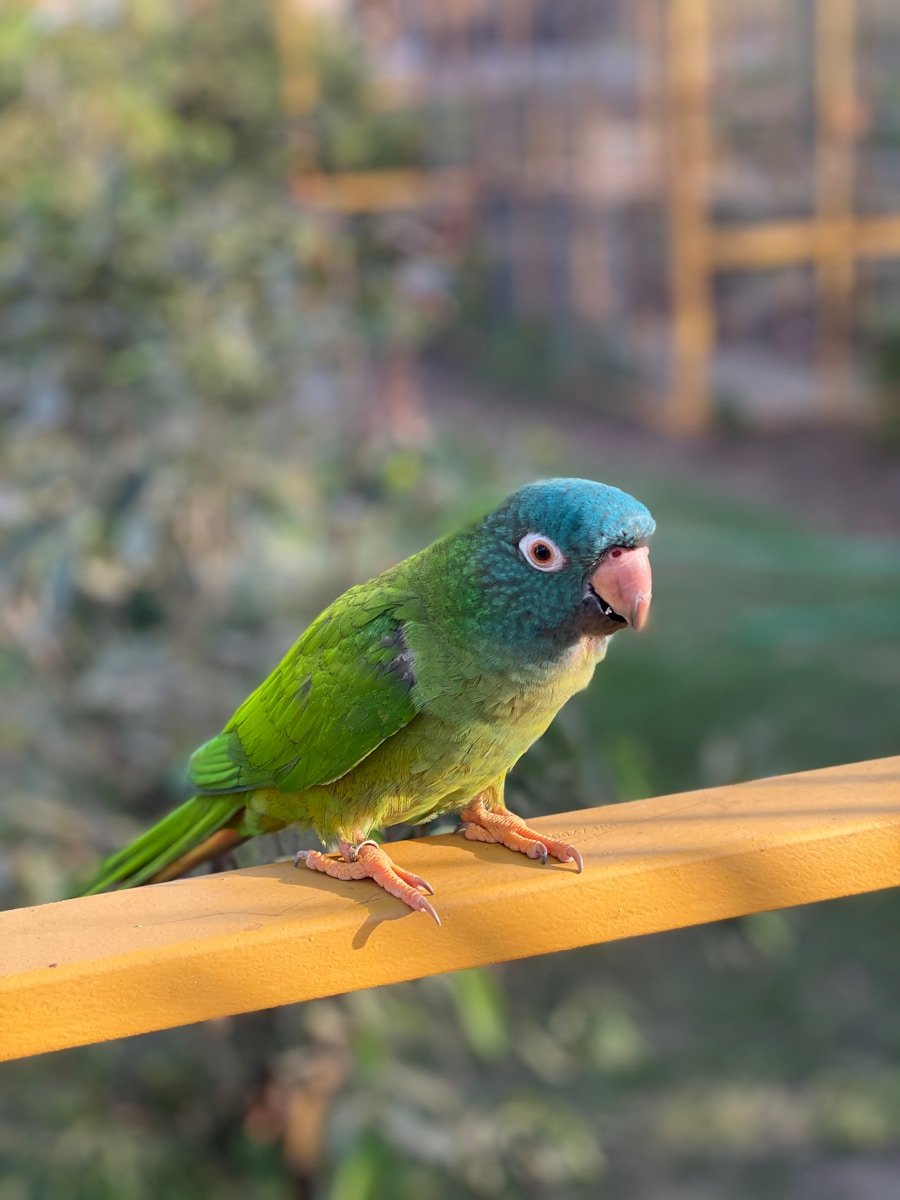
The Blue-Crowned Conure is easily recognizable due to its striking appearance. These medium-sized parrots typically measure around 10 to 12 inches in length. Their most distinguishing feature is the vibrant blue crown on their heads, which contrasts beautifully with their green body feathers.
The underparts are often a lighter green or yellowish hue, while their wings may display hints of blue and yellow. Their beaks are strong and curved, designed for cracking seeds and nuts, which is a significant part of their diet. Behaviorally, Blue-Crowned Conures are known for their playful and curious nature.
They are highly intelligent birds that require mental stimulation to keep them engaged. Their playful antics can include swinging from toys, climbing, and even mimicking sounds or words. These birds are social by nature and thrive in environments where they can interact with their human companions or other birds.
However, they can also exhibit a feisty side if they feel threatened or bored, leading to potential behavioral issues if not properly managed.
Housing and Care for a Blue-Crowned Conure
Creating a suitable living environment for a Blue-Crowned Conure is essential for their well-being. A spacious cage is crucial, as these birds are active and need room to move around. A cage that measures at least 24 inches wide, 24 inches deep, and 36 inches tall is recommended for a single bird.
The bars should be spaced no more than ¾ inch apart to prevent escape or injury. Additionally, providing various perches at different heights and materials will help keep their feet healthy and provide opportunities for climbing. In addition to a spacious cage, it’s important to provide enrichment through toys and activities.
Blue-Crowned Conures enjoy chewing and playing with toys made from wood, rope, and other safe materials. Regularly rotating toys will keep them engaged and prevent boredom.
This not only promotes physical activity but also strengthens the bond between the bird and its owner.
Diet and Nutrition for a Blue-Crowned Conure
| Food Type | Amount | Frequency |
|---|---|---|
| Fresh fruits | 1-2 tablespoons | Daily |
| Fresh vegetables | 1-2 tablespoons | Daily |
| Pellets | 1-2 tablespoons | Daily |
| Seeds and nuts | 1-2 teaspoons | 3 times a week |
| Protein (cooked chicken or eggs) | 1-2 teaspoons | 2 times a week |
| Treats (millet, whole grain bread) | As occasional treats | As occasional treats |
A balanced diet is vital for the health of a Blue-Crowned Conure. In the wild, these birds primarily feed on seeds, fruits, nuts, and vegetables. To replicate this diet in captivity, owners should provide a high-quality pellet formulated specifically for conures as the base of their diet.
Pellets ensure that the bird receives essential nutrients that may be lacking in a seed-only diet. In addition to pellets, fresh fruits and vegetables should be offered daily. Favorites among Blue-Crowned Conures include apples, carrots, leafy greens, and berries.
It’s important to wash all produce thoroughly and remove any uneaten portions after a few hours to prevent spoilage. Treats such as nuts can be given in moderation as they are high in fat. Providing a varied diet not only keeps the bird healthy but also stimulates their natural foraging instincts.
Training and Socialization of a Blue-Crowned Conure
Training and socialization are crucial aspects of raising a Blue-Crowned Conure. These intelligent birds thrive on mental challenges and can learn various tricks and commands with patience and consistency. Starting training at an early age is beneficial; however, older birds can also learn new behaviors with the right approach.
Positive reinforcement techniques, such as using treats or praise when the bird performs desired behaviors, are effective methods for training. Socialization is equally important for Blue-Crowned Conures. Regular interaction with family members helps them develop confidence and reduces the likelihood of behavioral issues such as biting or excessive screaming.
Introducing them gradually to new experiences—such as different environments or people—can help them adapt better to changes in their surroundings. Engaging in playtime outside of the cage fosters trust and strengthens the bond between the bird and its owner.
Common Health Issues and Veterinary Care for Blue-Crowned Conures
Like all pets, Blue-Crowned Conures can be susceptible to certain health issues that owners should be aware of. One common concern is obesity, which can arise from an improper diet or lack of exercise. To prevent this, it’s essential to monitor their weight regularly and ensure they have ample opportunities for physical activity.
Additionally, feather plucking can occur due to stress or boredom; providing enrichment and social interaction can help mitigate this behavior. Regular veterinary check-ups are crucial for maintaining the health of your Blue-Crowned Conure. An avian veterinarian can provide vaccinations, perform health screenings, and offer advice on diet and care specific to your bird’s needs.
Owners should also be vigilant about signs of illness such as changes in appetite, lethargy, or abnormal droppings. Early detection of health issues can lead to more effective treatment options.
Interactions and Bonding with a Blue-Crowned Conure
Building a strong bond with a Blue-Crowned Conure requires time, patience, and consistent interaction. These birds are social creatures that thrive on companionship; therefore, spending quality time with them is essential for developing trust. Engaging in activities such as talking to them, playing games, or simply allowing them to perch on your shoulder can foster a deeper connection.
Understanding your bird’s body language is also key to successful interactions. Signs of affection may include preening or snuggling against you, while signs of discomfort could manifest as biting or flapping away. Respecting their boundaries while encouraging positive interactions will help create a trusting relationship over time.
The more time you invest in bonding with your Blue-Crowned Conure, the more rewarding your experience will be.
Is a Blue-Crowned Conure the Right Pet Bird for You?
In conclusion, the Blue-Crowned Conure is an enchanting bird that offers companionship filled with joy and laughter. Their vibrant appearance combined with their playful nature makes them an appealing choice for many potential pet owners. However, it’s essential to consider whether you can meet their care needs—such as providing ample space, social interaction, and a balanced diet—before bringing one into your home.
If you’re an individual or family willing to invest time in training and socializing your bird while providing a stimulating environment, then a Blue-Crowned Conure could be an excellent addition to your life. Their affectionate demeanor and engaging personality can bring immense joy to your household. Ultimately, understanding the responsibilities involved in caring for these delightful creatures will ensure that both you and your Blue-Crowned Conure enjoy a fulfilling companionship for years to come.
If you are considering getting a Blue-Crowned Conure as a pet, you may also be interested in learning about the best bedding options for their cage. Check out this article on cedar chips and pine shavings as bedding to ensure you are providing a safe and comfortable environment for your feathered friend.
FAQs
What is a Blue-Crowned Conure?
A Blue-Crowned Conure is a medium-sized parrot native to South America. It is known for its vibrant blue crown and green body.
What is the average lifespan of a Blue-Crowned Conure?
Blue-Crowned Conures have an average lifespan of 25-30 years in captivity with proper care and attention.
What do Blue-Crowned Conures eat?
Blue-Crowned Conures primarily eat a diet of seeds, fruits, vegetables, and some protein sources such as eggs and cooked meat.
Are Blue-Crowned Conures good pets?
Blue-Crowned Conures can make great pets for those who are willing to provide them with the attention, socialization, and mental stimulation they require.
Do Blue-Crowned Conures require a lot of attention?
Yes, Blue-Crowned Conures are social birds and require regular interaction and mental stimulation to thrive in a home environment.
Are Blue-Crowned Conures noisy?
Blue-Crowned Conures are known for their loud and vocal nature, so potential owners should be prepared for their noisy tendencies.
Do Blue-Crowned Conures require a specific type of cage?
Blue-Crowned Conures need a spacious cage with plenty of room to move around, as well as toys and perches for mental stimulation and exercise.