Table of Contents
Creating a DIY cat tree is an engaging project that not only provides a fun and stimulating environment for your feline friend but also allows you to express your creativity. Cats are natural climbers and explorers, and a well-constructed cat tree can serve as a sanctuary for them to play, scratch, and rest. The appeal of a DIY cat tree lies in its customization; you can tailor it to fit your home’s aesthetic, your cat’s preferences, and your budget.
Unlike store-bought options, which may not always meet the specific needs of your pet or match your decor, a homemade cat tree can be designed with unique features that cater to your cat’s personality. Moreover, building a cat tree can be a rewarding experience that strengthens the bond between you and your pet. As you construct the various elements of the tree, you’ll have the opportunity to observe your cat’s behavior and preferences, allowing you to create a space that truly resonates with them.
This project can also be a great way to recycle materials you already have at home, making it an eco-friendly choice. Whether you are an experienced DIY enthusiast or a novice looking for a fun weekend project, building a cat tree can be both enjoyable and fulfilling. Please feel free to Contact us if you have any questions or concerns.
Key Takeaways
- DIY cat trees are a fun and practical way to provide your feline friend with a stimulating and safe environment.
- Basic materials and tools needed for building a cat tree include wood, carpet, screws, and a drill.
- Step-by-step instructions for building a basic cat tree involve cutting the wood, assembling the structure, and covering it with carpet.
- Adding features like scratching posts and platforms can enhance your cat tree and provide additional entertainment for your cat.
- Get creative with customizing your cat tree by adding hammocks, tunnels, or even a cozy hiding spot for your cat to enjoy.
Materials and Tools Needed for Building a Cat Tree
Base and Platforms
The foundation of a sturdy cat tree typically includes plywood or MDF (medium-density fiberboard) for the base and platforms. These materials provide stability and support for the structure.
Vertical Posts and Scratching Surfaces
You will also need wooden dowels or PVC pipes to create vertical posts that will allow your cat to climb and perch at various heights. For the scratching surfaces, sisal rope is an excellent choice due to its durability and texture, which cats love to scratch.
Tools and Accessories
In terms of tools, a power drill is indispensable for making holes and securing screws. A saw will be necessary for cutting the wood to the desired dimensions, while sandpaper can help smooth out any rough edges to prevent injuries. A staple gun is useful for attaching fabric or carpeting to the surfaces of the cat tree, providing comfort and traction for your pet. Other helpful items include screws, brackets for added stability, and non-toxic glue for securing smaller components.
Having these materials and tools on hand will streamline the building process and ensure that your cat tree is both functional and safe.
Step-by-Step Instructions for Building a Basic Cat Tree
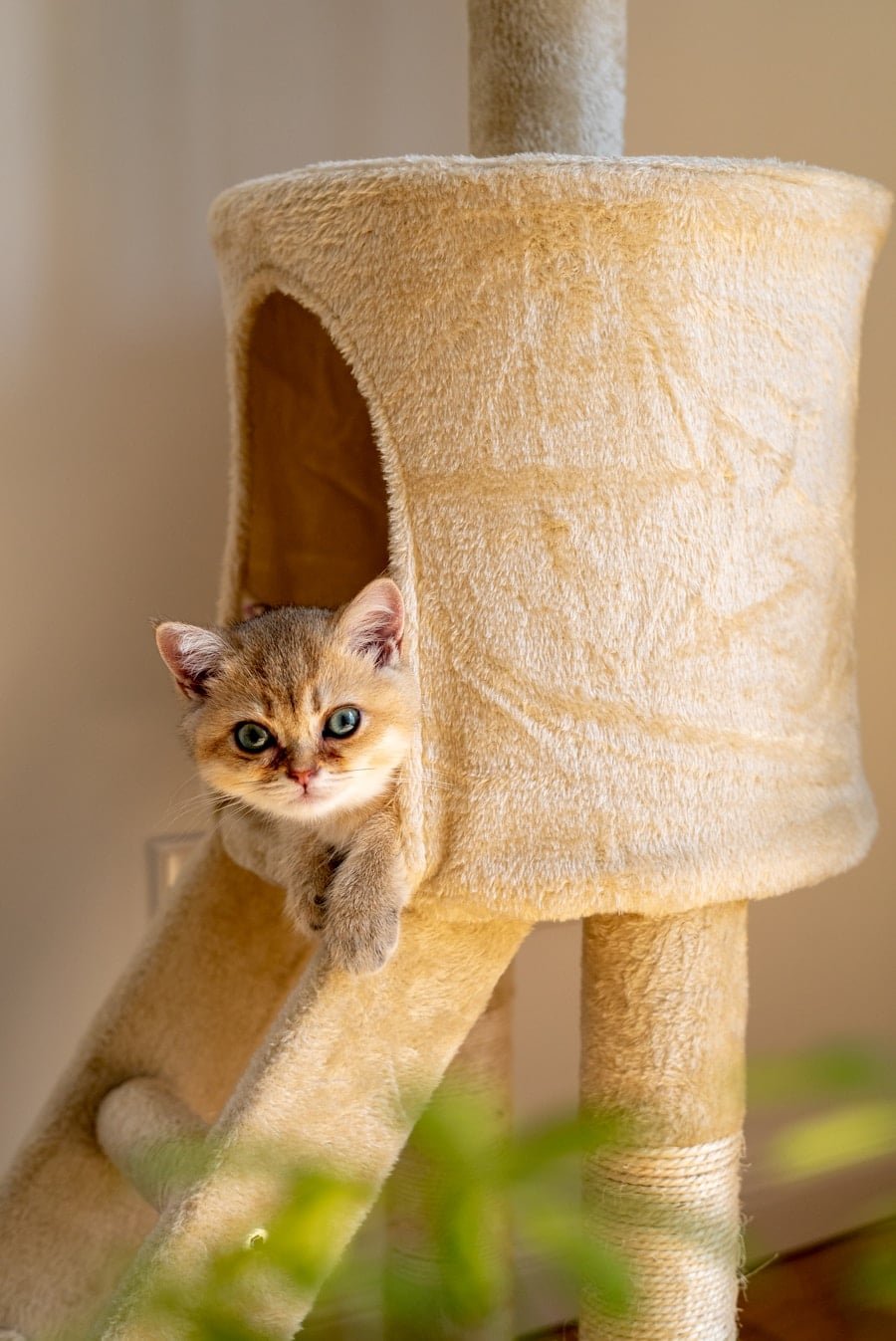
To begin constructing your cat tree, start by designing a blueprint that outlines the dimensions and layout of the structure. Consider how many levels you want and where the scratching posts will be placed. Once you have a plan in place, cut the plywood or MDF into the necessary shapes for the base and platforms.
The base should be large enough to provide stability; typically, a square or rectangular shape measuring at least 24 inches on each side works well. Next, assemble the vertical posts using wooden dowels or PVC pipes. Secure them to the base using screws or brackets to ensure they are firmly anchored.
Once the posts are in place, attach the platforms at varying heights using additional screws. It’s important to ensure that each platform is level and securely fastened to prevent wobbling when your cat jumps on or off. After constructing the main structure, cover the platforms with carpet or fabric using a staple gun, making sure to pull it tight for a neat finish.
Adding Features to Your Cat Tree, such as Scratching Posts and Platforms
Once the basic structure of your cat tree is complete, it’s time to enhance it with additional features that will make it more appealing to your feline companion. Scratching posts are essential components that help satisfy your cat’s natural instinct to scratch while protecting your furniture from damage. To create scratching posts, wrap sisal rope around the vertical posts, securing it with glue or staples at both ends.
This not only provides a designated scratching area but also adds texture and visual interest to the tree. In addition to scratching posts, consider adding multiple platforms at different heights to create an engaging climbing experience. Cats enjoy perching in high places where they can observe their surroundings.
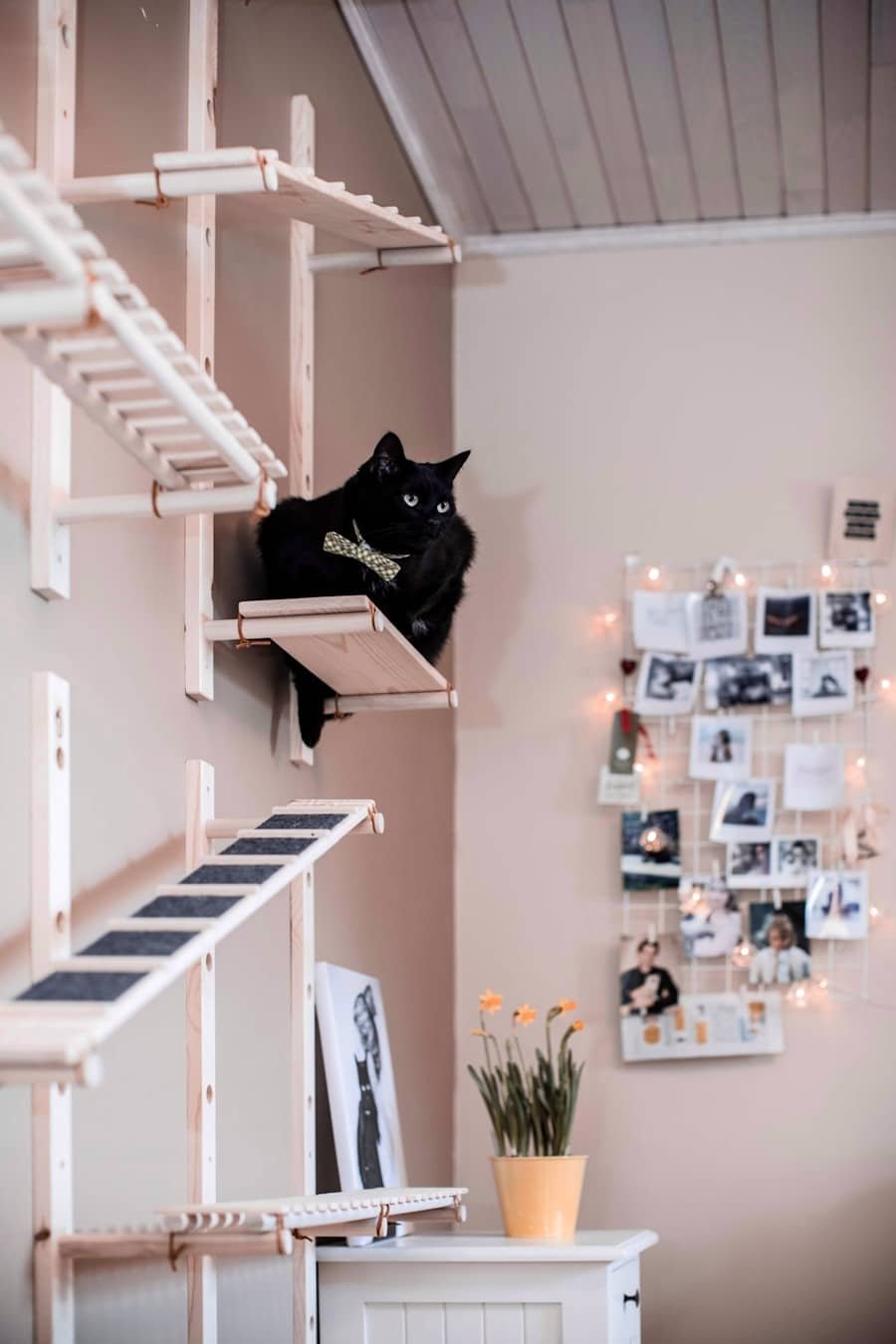
You can also incorporate ramps or ladders between levels for easier access, especially for older cats or those with mobility issues. Adding cozy hideaways or cubbyholes made from cardboard boxes or fabric-covered wood can provide your cat with a sense of security and privacy. These features will transform your basic cat tree into an interactive playground that caters to your pet’s instincts.
Creative Ideas for Customizing Your Cat Tree
Customization is one of the most exciting aspects of building a DIY cat tree. You can let your imagination run wild by incorporating unique elements that reflect both your style and your cat’s personality. For instance, consider painting or staining the wood in colors that complement your home decor.
You could also add decorative elements such as faux foliage or hanging toys that dangle from various levels of the tree, enticing your cat to play. Another creative idea is to integrate multi-functional features into your design. For example, you could build a small shelf or drawer into the base of the cat tree for storing toys or treats.
Alternatively, consider adding a hammock made from sturdy fabric between two platforms for an inviting lounging spot. If you have multiple cats, creating separate areas with distinct themes—such as a jungle-inspired section with faux vines or a cozy nook with soft cushions—can cater to their individual preferences while promoting social interaction.
Safety Tips for Building and Using a Cat Tree
Safety should always be a top priority when constructing and using a cat tree. To ensure stability, make sure that all components are securely fastened together; this includes checking that screws are tight and that there are no loose parts that could pose a risk of injury. The base should be heavy enough to prevent tipping when multiple cats jump on it simultaneously; consider adding weight by using thicker plywood or attaching weights to the bottom.
Additionally, avoid using toxic materials or finishes that could harm your pet if ingested. Opt for non-toxic paints and adhesives when customizing your cat tree. Regularly inspect the structure for wear and tear; replace any frayed sisal rope or damaged platforms promptly to maintain safety.
Finally, supervise your cats during their initial interactions with the new tree to ensure they feel comfortable and secure in their new environment.
Maintenance and Care for Your DIY Cat Tree
Maintaining your DIY cat tree is essential for ensuring its longevity and keeping it safe for your pet. Regular cleaning is necessary to remove fur, dirt, and any debris that may accumulate over time. Use a vacuum cleaner with an upholstery attachment to clean fabric-covered surfaces effectively.
For wooden areas, a damp cloth can help remove dust without damaging the finish.
If you notice any issues, address them immediately by tightening screws or replacing damaged components.
Additionally, consider refreshing the scratching surfaces by re-wrapping them with new sisal rope if they become worn down over time. By taking these maintenance steps, you can ensure that your DIY cat tree remains a safe and enjoyable space for your feline friend.
Conclusion and Final Thoughts on DIY Cat Trees
Building a DIY cat tree is not just about creating a functional piece of furniture; it’s about crafting an enriching environment tailored specifically for your beloved pet. The process allows you to engage with your creativity while providing your cat with an outlet for their natural behaviors such as climbing, scratching, and exploring. With careful planning, attention to detail, and an understanding of your cat’s needs, you can create a unique structure that enhances their quality of life.
As you embark on this project, remember that each cat is different; what works for one may not work for another. Take into account their preferences and habits as you design and build their new playground. Ultimately, the joy of seeing your cat enjoy their new space will make all the effort worthwhile, reinforcing the bond between you both while providing them with endless hours of entertainment and comfort.
If you’re considering building a DIY cat tree for your feline friend, you may also be interested in learning about the best bedding options for your pet. Check out this informative article on cedar chips and pine shavings as bedding to ensure your cat’s comfort and safety. Additionally, if you’re curious about bird behavior, you can read about why birds pluck their feathers and gain insight into their habits. And if you’re thinking about adding a pet bird to your family, be sure to read up on how much it costs to care for a pet bird to make an informed decision.
FAQs
What are DIY cat tree plans?
DIY cat tree plans are step-by-step instructions for building a cat tree or cat tower at home. These plans typically include a list of materials, tools needed, and detailed instructions for assembly.
Why should I build a cat tree for my cat?
Building a cat tree provides your cat with a designated space to climb, scratch, and play, which can help satisfy their natural instincts and keep them entertained. It also gives them a safe and elevated space to observe their surroundings.
Are DIY cat tree plans cost-effective?
Yes, DIY cat tree plans can be cost-effective as they allow you to customize the materials and design based on your budget and preferences. Additionally, building your own cat tree can be more affordable than purchasing a pre-made one.
What materials are typically used in DIY cat tree plans?
Common materials used in DIY cat tree plans include wood, carpet, sisal rope, PVC pipe, and other sturdy materials for the structure. These materials are chosen for their durability and ability to withstand a cat’s scratching and climbing behaviors.
Do I need special tools to build a cat tree using DIY plans?
While specific tools may vary depending on the design, common tools needed for building a cat tree using DIY plans include a saw, drill, staple gun, and screws. It’s important to follow the instructions provided in the DIY plans for the specific tools required.
Can I customize the design of a cat tree using DIY plans?
Yes, DIY cat tree plans often allow for customization in terms of size, shape, and features. This means you can tailor the design to fit your space and your cat’s preferences, such as adding additional platforms, scratching posts, or toys.
Are DIY cat tree plans suitable for beginners?
Many DIY cat tree plans are designed with beginners in mind and provide detailed instructions to guide you through the building process. However, it’s important to choose a plan that matches your skill level and to follow the instructions carefully.
Where can I find free DIY cat tree plans?
Free DIY cat tree plans can be found online through various websites, blogs, and forums dedicated to DIY projects and pet care. Some pet supply stores and cat-related publications may also offer free plans for building cat trees.